Chris Egan-Lee is the Director of Realfit, a boutique personal training studio in Malvern East coaching adults of all ages since 2006. He brings over six years of coaching experience across strength and conditioning, HIIT, and martial arts, alongside a background in youth team coaching and high-level competitive sport. Combined with 15 years in business development, Chris leads Realfit with a genuine understanding of what people need to train consistently and build strength that lasts.
Why Boutique Personal Training Gets Results That Big Gyms Simply Cannot Match
Chris Egan-Lee • April 22, 2026
At some point, most people who are serious about their health reach the same crossroads. They know they should be training. They may have tried a large commercial gym, signed up in January, gone a handful of times, and quietly stopped by March.
Not because they lacked willpower, but because nothing about the experience was built for them. The machines were unfamiliar, the floor was crowded, and nobody noticed whether they showed up or not.
For people in their 40s and 50s, that experience tends to land differently.
The margin for wasted effort shrinks. The need for expert guidance, genuine accountability, and a training environment that actually fits your life becomes harder to ignore. That is where boutique personal training comes in, and why more people are making the switch.
What Is Boutique Personal Training?
Boutique personal training is a model of fitness coaching that brings together the personalisation of one-on-one training with the energy of a small group environment. As a boutique personal training service, it is built around qualified trainers, small group sizes of no more than eight, and structured programming tailored to the individuals in the room.
Unlike large commercial gyms, boutique studios are not designed for self-directed training. The trainer is present, attentive, and accountable for what happens in every session. Members follow a programme that builds over time rather than completing random workouts in isolation.
Realfit's semi-private group training model is a strong example of this approach in practice. Sessions run with a maximum of eight members, every participant is known by name, and programming is designed to progress systematically over weeks and months, not just deliver a hard workout on the day.
For those who prefer a more individual focus, Realfit also offers 1:1 personal training and 2:1 sessions for couples or training partners.
The Problem with Big Chain Gyms for People Who Actually Want Results
This is not about dismissing large gyms. For experienced, self-directed trainers who know exactly what they want to do and how to do it safely, a commercial gym membership makes perfect sense. The equipment is plentiful, the access is flexible, and the cost is low.
The problem is that most people, particularly those returning to exercise after a break, starting later in life, or training around an injury or a demanding career, are not that person. And large gyms are not designed for them.
Walk into most commercial gyms, and you will find floors packed with equipment and very few answers. There is no one checking your form on a deadlift. No one is asking how your knee has held up since last week. No programme that remembers where you were three sessions ago. You are a membership number, and whether you show up or not changes nothing for anyone but you.
For a busy professional in their 40s juggling work, family, and limited training time, this environment creates a very particular kind of friction. Without guidance, it is easy to do the same things in the same order for years and wonder why nothing changes. Without accountability, it is easy to quietly skip a session when life gets busy, and then another, and then another.
The research on exercise adherence is consistent on this point. Social support, accountability, and perceived competence are among the strongest predictors of long-term exercise consistency. Large, anonymous gym environments tend to undermine all three.
What Actually Makes a Boutique Studio Different
The differences that matter most are not about aesthetics or equipment. They are about the structure of the experience itself.

Personalised attention in every session
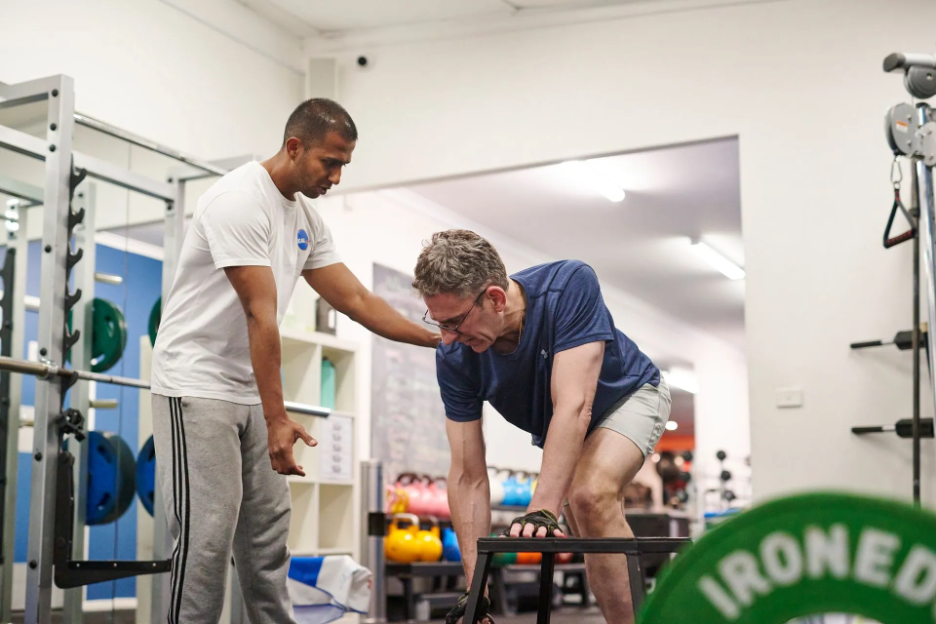
In a boutique PT studio (whether working one-on-one, as a pair, or in a semi-private group) the trainer can observe every person in the room. Technique corrections happen in real time. Modifications are made on the spot for members managing an old shoulder injury or returning after time away. This level of attention is structurally impossible in a commercial gym setting.
Programming that builds over time
Most large gyms offer generic programmes or leave members to create their own. Boutique studios programme intentionally, with progression built in across weeks and months. Members are not just working hard; they are working towards something specific, with a plan that adapts as they get stronger.
A community that creates accountability
When the trainer knows your name and the other seven people in the room have trained alongside you for months, the social dynamics of training shift. Members show up because people notice when they do not. That kind of low-pressure accountability is one of the most powerful tools in long-term exercise adherence, and it does not exist on a crowded commercial floor.
Correct technique and injury prevention
This is particularly relevant as we age. Poor technique under load is the leading cause of preventable training injuries. In a boutique environment, qualified coaches can catch and correct movement faults before they become problems, something that simply cannot happen when one staff member is managing two hundred members on the gym floor.
Long-term relationships, not transactions
Realfit has been operating in Malvern East since 2006. Many members have been training with the same coaches for years. That continuity, knowing someone's history, their goals, their physical limitations, their progress, produces a quality of coaching that no large gym can replicate. For personal training at this level, the relationship between coach and member is the product.
Why This Matters More After 40
The case for boutique personal training is compelling at any age. After 40, it becomes harder to argue against.
The physiology changes. Recovery takes longer. The risk of injury from poor technique or overloading a joint increases. Muscle mass begins to decline more rapidly without deliberate resistance training. These are not reasons to train less; they are reasons to train smarter, with more expert oversight, not less.
The lifestyle context changes too. Careers are often at their most demanding. Family commitments are real. The window for training is smaller, which means every session carries more weight. Spending that time in an environment where nothing is optimised for you is a cost most people in this stage of life cannot afford to keep paying.
And then there is the social dimension. Research consistently shows that training with others in a supportive, structured environment improves long-term consistency. The accountability of a small group, the relationships formed over months and years of training together, and the sense of belonging to something beyond a membership fee: these factors have a measurable impact on whether people keep showing up.
The members who train at Realfit are not there for a quick transformation. They are there because they want to feel strong, capable, and healthy for the long term, and they have found an environment that makes that sustainable. Understanding what a good personal trainer should offer you can help clarify exactly what to expect from that kind of coaching relationship.
What to Look for in a Boutique Personal Training Studio in Melbourne
If you are researching boutique gyms in Melbourne, a few things are worth looking for before committing.
Qualified, experienced coaches
Not all personal trainers are equal. Look for coaches with relevant tertiary qualifications in exercise science or sport and recreation, ongoing professional development, and real experience working with people in your age group and with your goals. Ask directly.
A clear programming methodology
Good studios can explain how their programming works and why. If the answer is "we mix it up to keep things interesting," that is a red flag. Progressive overload, structured recovery, and periodisation are the foundations of effective long-term training.
Small group sizes with genuine attention
The cap matters. Eight people per session is meaningfully different from twenty. Ask what the maximum number of participants is and whether that cap is consistently enforced.
Community and culture
Spend time in the space before you commit. Talk to members. Notice whether the coaches know who is in the room. The culture of a studio is visible within minutes of walking through the door.
Location and accessibility
Consistency depends on convenience. When evaluating a boutique gym, Melbourne's inner southeast offers a handful of quality options, with Malvern East home to some of the most established PT studios in the area. Realfit has been part of that community for nearly two decades, which speaks to both its longevity and its connection to the local area.
The checklist of things to look for in a personal training studio goes beyond group size alone, covering trainer qualifications, programming methodology, and the kind of community culture that determines whether you actually keep showing up.
Ready to Find Out If Realfit Is the Right Fit for You?
Realfit has been helping people in Malvern East and Melbourne's inner southeast train with purpose since 2006. Nearly two decades of experience, a maximum of eight members per session, and coaches who know your name and your goals: that is what semi-private group training at Realfit looks like in practice.
Finding the right place to train is a personal decision, and we think the best way to know if Realfit is right for you is to experience it for yourself.
If you are ready to train in an environment built around you, get in touch with us today.
Frequently Asked Questions
What is boutique personal training?
Boutique personal training combines the individual attention of one-on-one coaching with the energy and accessibility of a small group environment. Sessions are led by qualified trainers, limited to a small number of participants, typically between four and eight, and built around structured, progressive programming. Unlike large commercial gyms, the trainer is actively coaching every person in the room throughout the session.
What is the difference between a boutique gym and a regular gym?
A regular commercial gym provides access to equipment and space, with members largely responsible for their own programming and progress. A boutique gym or studio is trainer-led, with small group sizes, personalised attention, and structured programming built in. The key difference is not the equipment; it is the level of guidance, accountability, and community built into the experience.
Is boutique personal training worth it?
For people who want consistent, long-term results with expert guidance and genuine accountability, boutique personal training consistently outperforms self-directed gym training. The combination of qualified coaching, small group sizes, and structured progression addresses the three factors most responsible for exercise dropout: lack of direction, lack of accountability, and lack of connection to a community.
What should I expect from my first session at a personal training studio?
Most studios will begin with an initial assessment or introductory session to understand your goals, training history, and any physical considerations. Expect to be asked questions, observed moving, and introduced to the coaches and other members. A good studio will make you feel capable and informed from the first session, not overwhelmed or out of place.
About The Author

LATEST POSTS

Stand with your feet wide apart and with your hands clasped together. Lower into a squat, pressing your elbows into the inside of your knees.
Belly fat exercises at the gym that actually work long term? It starts with strength training, not endless cardio. Here's why, from Realfit Malvern East.

Not sure how much to eat? The fist diet rule is a no-scale portion method that works anywhere. Learn how from the trainers at Realfit.